What is Split Type Solar Street Light?
Mar 19, 2026
Read:1
Source: Roadsmart Solar
Table of Contents
Introduction
Understanding Split Type Solar Street Light
How Split Type Solar Street Lights Work
Advantages of Split Type Solar Street Lights
Limitations of Split Type Solar Street Lights
Applications of Split Type Solar Street Lights
Choosing the Right Split Type Solar Street Light
Conclusion
Frequently Asked Questions
Introduction
Split type solar street lights have emerged as an increasingly popular solution for outdoor lighting projects, offering greater flexibility, efficiency, and longevity than conventional integrated solar street lights. This article explores what split type solar street light systems are, their working principles, differences from all-in-one systems, advantages, limitations, applications, and provides guidance for installation and purchasing. The content is designed for users researching, comparing, or selecting solar street lighting systems for urban, rural, or industrial environments.
Understanding Split Type Solar Street Light
Basic Definition
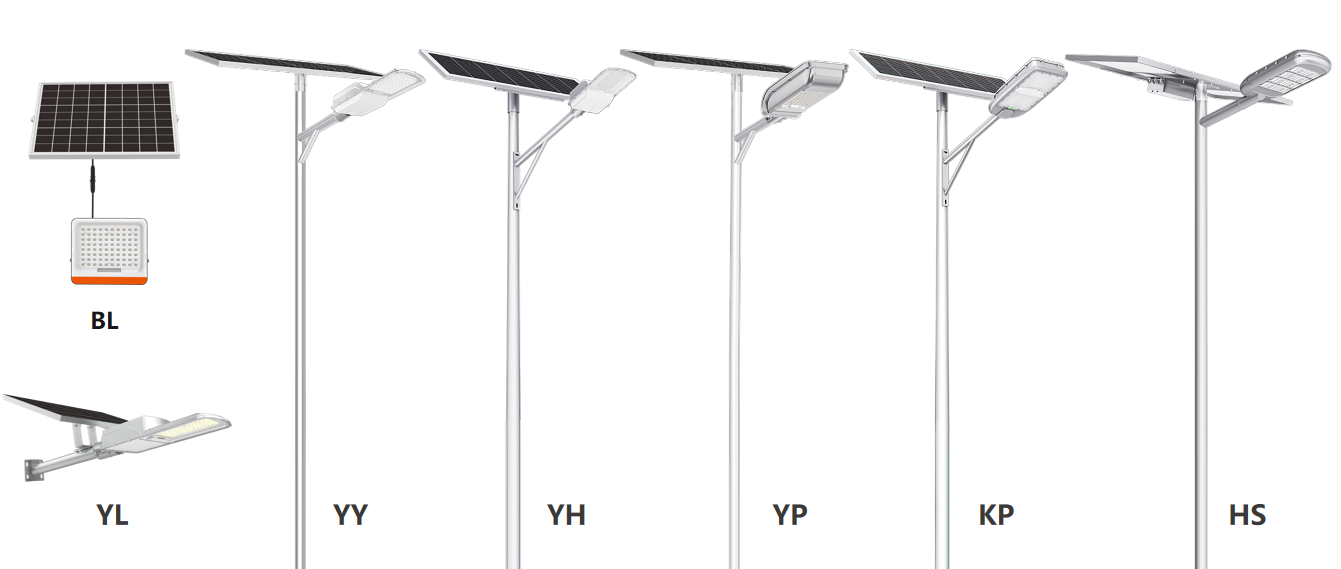
A split type solar street light is a modular lighting system where the core components—solar panel, LED lamp, battery, and controller—are installed separately rather than integrated into a single enclosure. This separation allows for better optimization of energy capture, easier maintenance, and flexible placement to suit various lighting needs. Among industry options, the split solar street light configuration is particularly valued for projects requiring independent panel and lamp positioning.
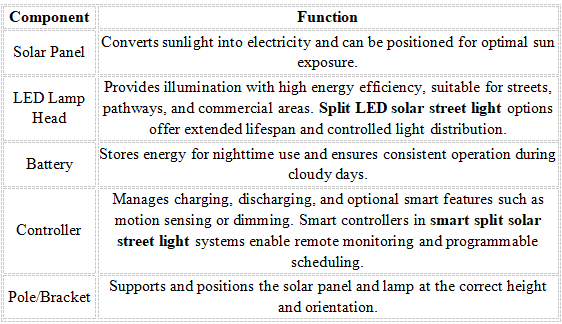
Main Components:
Why is it Called “Split Type”?
The term “split type” reflects the physical separation of the solar panel, battery, and lamp head. Unlike integrated systems, where all components are combined, split type designs allow:
Placement of the solar panel in the sunniest location regardless of the lamp position.
Proper housing of batteries for temperature management and protection.
Customized LED lamp installation for optimal lighting coverage.
This modular approach provides significant flexibility in layout and design, particularly for streets with irregular shapes, shaded areas, or complex urban environments. Sourcing split solar street light for sale from reputable split solar street light manufacturers and suppliers ensures that the system meets design and durability standards.
How Split Type Solar Street Lights Work
Daytime Charging Process
During daylight hours, the system captures and stores energy:
Solar panels absorb sunlight and convert it into electrical energy.
The electricity is stored in high-capacity batteries for use after sunset.
The controller ensures efficient charging, prevents overcharging, and maintains battery health. Advanced split solar street light models incorporate features that optimize energy conversion and distribution.
Nighttime Illumination Process
At night, stored energy powers the LED lamp:
The battery provides power to the lamp.
The controller manages energy distribution, lighting schedules, and optional features such as:
Dimming to conserve energy.
Motion sensors to increase brightness upon detecting movement. Smart split solar street light solutions often integrate these capabilities with remote management.
Timers for programmed lighting periods.
This energy management ensures reliable and efficient operation even in areas with inconsistent sunlight.
Advantages of Split Type Solar Street Lights

Installation Flexibility
Split type systems allow solar panels and lamps to be positioned independently. This is especially beneficial for urban streets with shading from buildings or trees, and for irregular road layouts where optimal sunlight exposure is not aligned with lamp placement. Choosing split solar street light suppliers with design expertise can further optimize placement and system performance.
(h3) Improved Efficiency and Energy Management
The use of MPPT (Maximum Power Point Tracking) controllers ensures that solar panels operate at peak efficiency. Batteries can be arranged for optimal charge and discharge cycles, enhancing energy utilization and extending component lifespan. This capability is a key reason why split type solar street light solutions are preferred for energy-conscious projects.
(h3) Longer Lifespan and Maintenance Benefits
Modular components can be replaced individually, reducing maintenance costs. LED lamps, when separated from batteries and controllers, experience less thermal stress, contributing to longer operational life. Many high-quality split LED solar street light systems provide over 50,000 hours of reliable illumination. Procuring products from certified split solar street light manufacturers ensures that each component adheres to stringent quality standards.
(h2) Limitations of Split Type Solar Street Lights

(h3) More Complex Installation
The modular nature of split type systems requires additional wiring, proper alignment of components, and skilled labor, making installation more demanding compared to integrated systems.
(h3) Risks from Poor Design or Craftsmanship
Incorrect wiring, inadequate waterproofing, or improper battery placement can compromise performance and safety. Professional design and installation, ideally from an experienced split solar street light supplier, are essential to avoid operational issues.
(h3) Less Compact Appearance
The separation of components can result in a bulkier appearance, which may not align with aesthetic requirements for certain urban projects or decorative applications.
(h3) Requires Careful Planning
Successful implementation demands careful consideration of solar panel orientation, battery housing, pole height and placement, and cable routing to ensure both safety and optimal performance.
(h2) Applications of Split Type Solar Street Lights
(h3) Urban Streets and Roads
Ideal for streets with tall buildings or trees that cast shadows, allowing panels to be installed in optimal sunlight areas independently of the lamp head. Split solar street light systems excel where flexibility and tailored illumination are necessary.
(h3) Rural Roads and Highways
Off-grid applications benefit from split systems as they can cover long distances and provide reliable lighting in remote areas without connection to the electrical grid. Many split solar street light for sale units are designed for highway-grade durability.
(h3) Industrial and Commercial Spaces
Warehouses, parking lots, campuses, and security zones can use split type systems for high-power and tailored lighting needs, often integrating smart features for monitoring and control. Smart split solar street light implementations allow real-time performance tracking and energy efficiency optimization.
(h2) Choosing the Right Split Type Solar Street Light
(h3) Solar Panel Efficiency and Battery Capacity
Ensure that the panel output aligns with energy demand and include sufficient battery capacity for cloudy days or periods of low sunlight. Consulting with split solar street light manufacturers helps match system specifications to the intended site.
(h3) LED Specifications
Brightness, color temperature, beam angle, and light uniformity should match the intended application, ensuring safety and visibility. Selecting split LED solar street light models from reputable suppliers guarantees consistent quality.
(h3) Controller Features and Smart Functions
Advanced controllers can include motion sensors, dimming options, and remote monitoring capabilities, making them suitable for smart lighting projects. Smart split solar street light solutions offer integration with IoT-based energy management platforms.
(h3) Durability and IP Rating
Waterproof, dustproof, and corrosion-resistant components are essential for long-term outdoor operation, typically with IP65 or higher ratings.
(h3) Certification and Warranty
Look for ISO, CE, and RoHS certifications to ensure quality and safety, and confirm the warranty coverage for critical components like LED lamps, batteries, and controllers. Working with recognized split solar street light suppliers ensures compliance with industry standards.
(h2) Conclusion
Split type solar street lights provide flexible, efficient, and project-oriented solutions for outdoor lighting. They are particularly advantageous for high-power or complex applications. Key considerations include understanding the modular structure, comparing with integrated systems, matching the system to the site and energy needs, and confirming reliable installation and maintenance support. Selecting the right split type solar street light system, from certified split solar street light manufacturers, guarantees performance and long-term reliability.
(h2) Frequently Asked Questions
1. What is the difference between split type and all-in-one solar street lights?
Split type systems separate the solar panel, battery, and lamp, offering greater flexibility, energy efficiency, and easier maintenance compared to integrated units. Split solar street light configurations are ideal for projects with variable sunlight exposure and complex layouts.
2. Are split solar street lights more expensive?
They typically have higher upfront costs but provide longer lifespan, better performance, and lower long-term maintenance costs. Availability of split solar street light for sale units allows competitive sourcing.
3. Can an all-in-one solar street light be upgraded to a split type system?
Upgrading is not straightforward, as split type systems require separate components and installation planning.
4. How long do split solar street lights last?
With proper installation and maintenance, core components such as LED lamps, batteries, and solar panels can last 10 years or longer. Quality split LED solar street light products from trusted suppliers extend operational longevity.
5. What applications benefit most from split type systems?
Urban streets with shading, remote rural roads, highways, industrial facilities, and commercial properties with high lighting demands or smart monitoring needs benefit the most from smart split solar street light systems.
Table of Contents