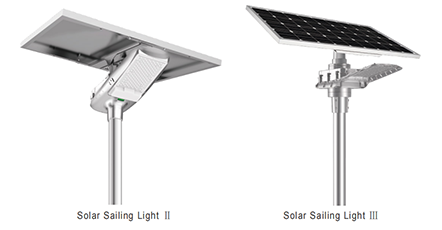
101 Guide to Smart Street Lighting System
Feb 28, 2026
Read:29
Source:
Introduction
Cities, campuses, industrial parks, ports, airports, and residential communities are all under pressure to make outdoor lighting more efficient, more responsive, and easier to manage. Traditional street lights can illuminate roads, but they cannot “think.” They do not understand traffic patterns, weather conditions, maintenance needs, or energy priorities. A modern smart street lighting system does all of that and more.
This guide explains what smart street lighting is, how it works,core conponents, why it matters, and real projects. It is written for project owners, city planners, contractors, engineers, distributors, and anyone evaluating a smart street light project or a larger intelligent street lighting system project. If you want a practical, structured overview of smart city street lighting, this is the place to start.
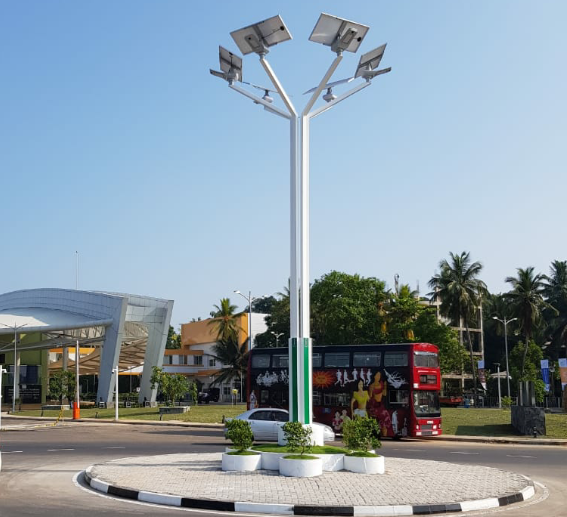
What Is Smart Street Lighting?
Smart street lighting is a connected outdoor lighting approach that combines LED luminaires with controls, sensors, communication, and software management. Unlike conventional street lights that simply switch on at dusk and off at dawn, a smart street lighting system can dim, brighten, report faults, track energy use, and respond to real-time conditions such as traffic flow, pedestrian activity, or weather changes.
At a system level, smart city street lighting usually includes four layers: the lighting fixture, the control device, the communication network, and the management platform. Together, these elements allow a smart street light control system to operate lights individually or in groups, execute dimming schedules, receive sensor data, and send performance information back to a central dashboard. This is why intelligent street lighting is not just about efficient luminaires—it is about turning lighting infrastructure into a responsive, manageable, and data-driven network.
In practice, a smart led street light can automatically follow time-based or motion-based profiles, support remote maintenance, and integrate with a smart street light management system for asset monitoring and operational analysis. For larger deployments, an intelligent street light control system can also support zoning, adaptive lighting, and future smart-city functions. That is what makes a smart street light project or an intelligent street lighting system project fundamentally different from a basic LED street light upgrade.
Why Smart Street Lighting Matters
Street lights are among the most widespread public assets in any city or community. They consume energy every night, require regular maintenance, and directly affect road safety, pedestrian comfort, and security perception. That means even small improvements, when multiplied across hundreds or thousands of poles, create major operational gains.
Lower Energy Consumption
A key reason many municipalities adopt smart city street lighting is the ability to reduce energy use without sacrificing safety. Smart systems combine LED efficiency with scheduled dimming, occupancy-based control, and scene management. Instead of running at full output all night, a smart street lighting system can use lower levels during quiet periods and higher levels only when needed.
Better Maintenance Efficiency
In conventional systems, failures are often discovered only after public complaints or manual inspection. A smart street light management system changes that by reporting faults automatically. Maintenance teams can see which fixture failed, what the probable cause is, and whether the issue is urgent. That reduces night patrols, truck rolls, and response times.
Improved Public Safety
Lighting quality strongly affects visibility. With intelligent street lighting, cities can target higher output at intersections, pedestrian crossings, and late-night activity zones while keeping lower-risk segments dimmed to save energy. This flexibility is especially useful in a complex intelligent street light project where road use varies by hour and location.
Data-Driven Operations
A modern smart street light management system produces usable data: burn hours, dimming profiles, real-time power usage, alarm logs, and communication status. This helps operators improve budgeting, maintenance planning, and energy strategy.
Foundation for Smart City Expansion
A smart city street lighting network can become a platform for other urban technologies such as environmental sensors, traffic counters, CCTV integration, emergency buttons, EV charging coordination, and public Wi-Fi nodes. For many cities, street lighting is the easiest distributed infrastructure to upgrade first.
Core Components of a Smart Street Lighting System
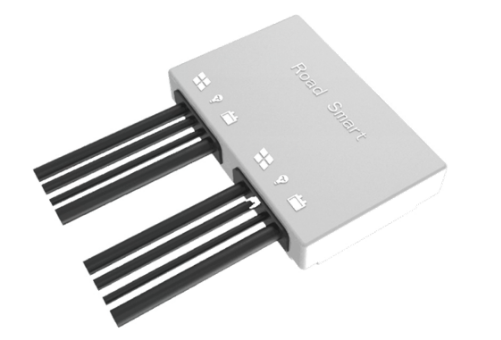
1. Solar Street Light Controller
The controller is the intelligence center of the system, responsible for energy harvesting, battery protection, power allocation, and operating stability. RoadSmart integrates multiple proprietary control technologies to improve reliability, efficiency, and long-term performance.
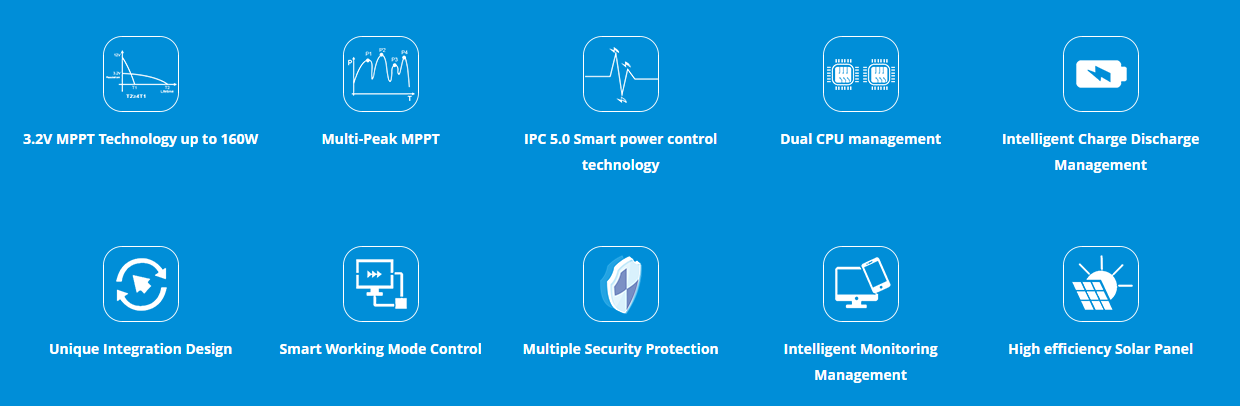
Multi-Peak MPPT Technology
Accurately tracks the maximum power point even under partial shading, dust, or panel mismatch, helping the system harvest more solar energy throughout the day.Intelligent Power Control 5.0
Dynamically adjusts output based on battery condition and real operating demand, ensuring more stable nighttime lighting and longer runtime during cloudy or rainy periods.ICD Technology
Intelligent charge and discharge management improves battery safety, balances power flow, and extends overall battery service life.Dual-Core CPU Management
A dual-core architecture enhances controller response speed and operating reliability, while the backup logic reduces the risk of data loss or control failure.Mode Memory Management
The controller stores operating parameters and restores them automatically, ensuring consistent performance after maintenance, transport, or unexpected interruptions.OLC Technology
Optimizes load control and power distribution to improve system efficiency and protect key components under varying operating conditions.Intelligent Temperature Control
Continuously monitors thermal conditions and adjusts performance accordingly to maintain stability and protect the controller and battery in extreme environments.
2.Advantages of the Solar Street Light Source
The light source determines how efficiently solar energy is converted into usable illumination. RoadSmart combines high-performance LED chips with advanced optical design to deliver brighter, more uniform roadway lighting.
High-Efficiency LED Chips
With the same wattage input, RoadSmart's LED source delivers higher brightness and better lighting efficiency, helping reduce energy consumption while maintaining strong performance.Remote Controller with Six Classic Working Modes
Multiple pre-set operating modes allow flexible adjustment for different roads, weather conditions, and traffic patterns, making the system easier to adapt to real project needs.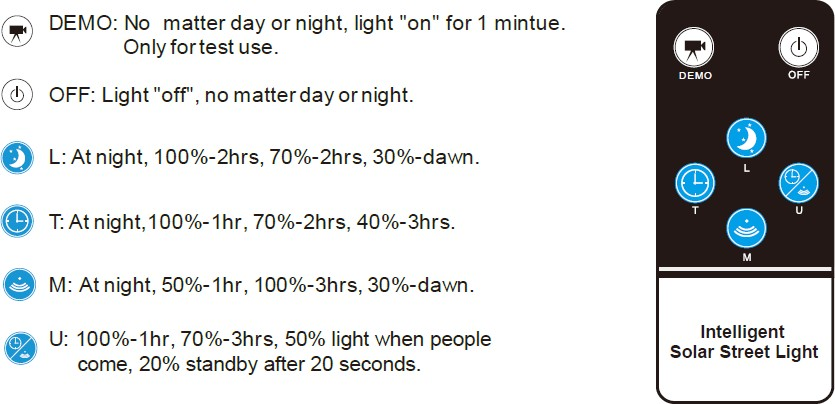
Patent Bat-Wing Lens
RoadSmart's patented bat-wing lens improves light distribution, enlarges the lighting area, and enhances roadway uniformity while reducing dark spots and glare.
3. Solar Street Light Solar Panel
The solar panel is the primary energy source of the system, so both performance and structural reliability are critical. RoadSmart was one of the first brands in the solar street lighting industry to emphasize strength and safety analysis as part of product development.
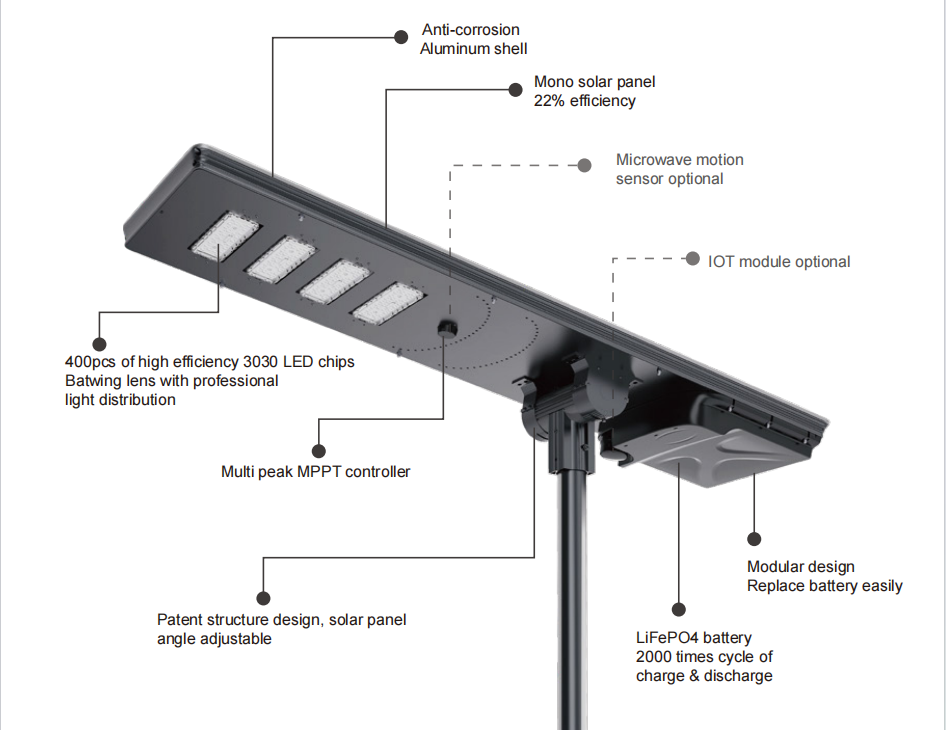
To ensure long-term safety and reliability, each system undergoes a series of validation tests, including:
Waterproof testing
Dustproof testing
Anti-corrosion testing
Transportation simulation testing



These tests help verify that the solar panels and overall system structure can withstand challenging outdoor conditions and maintain stable field performance.
4. Solar Street Light Battery System
The battery system is a core factor in autonomy, stability, and lifecycle cost. RoadSmart applies 3.2V MPPT technology up to 160W to improve battery pack reliability and reduce the risks commonly found in conventional multi-string systems.
In traditional 12V or 24V multi-string battery structures, differences in cell capacity, voltage, and internal resistance can affect the entire battery pack. If one cell becomes unstable, the overall system life may be significantly reduced.
With RoadSmart's 3.2V single-string MPPT technology, the impact of a single-cell issue is greatly isolated, so the whole battery pack is less vulnerable.
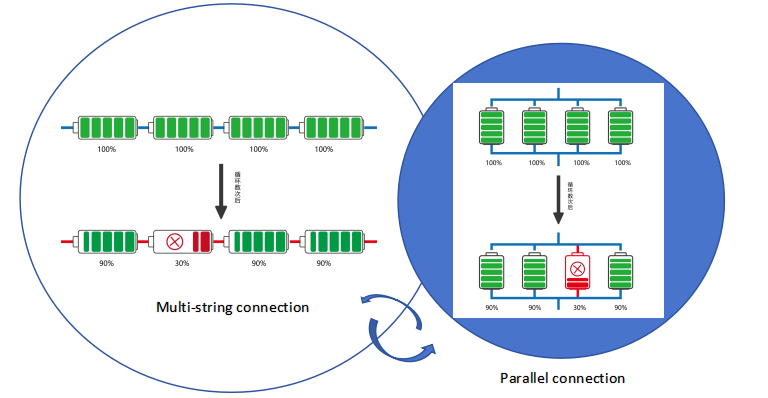
This design offers several key benefits:
Reduces the probability of battery-related problems by 75% compared with traditional 12V systems
Improves overall product stability
Extends service life by up to 3 times
As a result, the battery system becomes safer, more durable, and better suited for long-term outdoor solar lighting applications.
5. Smart Solar Street Lighting System
Beyond hardware performance, RoadSmart also focuses on intelligent system integration to create more efficient and secure lighting networks.
Internet of Things System
Enables real-time monitoring, remote data access, and easier centralized management of street lighting assets.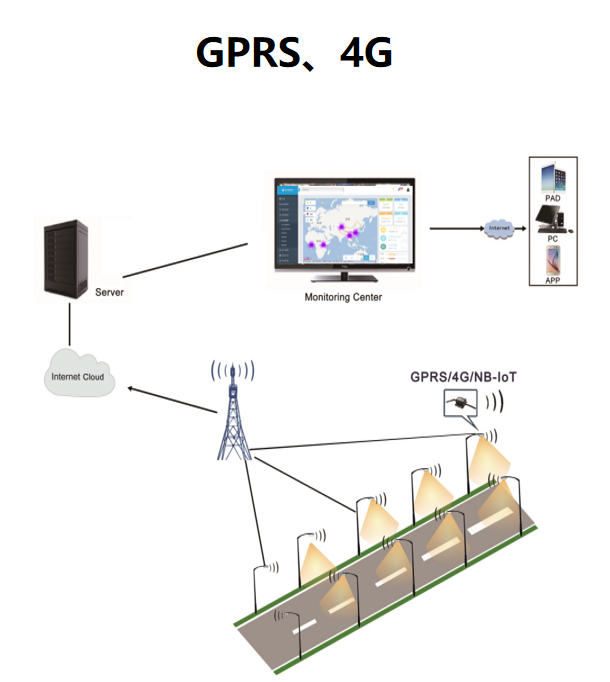
Hybrid AC-DC System
Supports more flexible power supply configurations, improving application adaptability in different project environments.Anti-Theft Alarm System
Adds an extra layer of security by helping detect unauthorized movement or tampering, protecting valuable system components in the field.
Smart Street Lighting vs. Traditional Street Lighting
| Comparison Area | Smart Street Lighting | Traditional Street Lighting |
|---|---|---|
| Operating Logic | Uses automated schedules, sensor response, and remote commands to adjust lighting in real time. | Typically operates with simple on/off control through timers or photocells. |
| Energy Efficiency | Optimizes output through dimming, motion-based control, and zone management to reduce unnecessary energy use. | Usually runs at fixed output all night, regardless of traffic or activity levels. |
| Control Capability | Supports individual, group, or city-wide control through a smart street light control system. | Control is generally local only, with limited or no centralized flexibility. |
| Monitoring & Diagnostics | Reports power use, communication status, and faults to a smart street light management system. | Faults are often discovered only through manual inspection or public complaints. |
| Maintenance Approach | Enables predictive and remote maintenance with alarm logs and asset-level diagnostics. | Relies on reactive maintenance after a visible outage or service issue occurs. |
| Lighting Adaptability | Can brighten or dim based on time, traffic, pedestrian movement, weather, or programmed scenes. | Provides static lighting output with little or no adaptability. |
| Data Value | Generates useful operational data for energy analysis, maintenance planning, and performance reporting. | Produces little to no data beyond direct electricity consumption. |
| Integration Potential | Can serve as a platform for broader smart city street lighting functions such as sensors, monitoring, and connected services. | Functions only as a lighting asset, with limited ability to support digital infrastructure. |
| Project Value | Delivers both lighting performance and infrastructure intelligence in a smart street light project or intelligent street lighting system project. | Primarily delivers basic illumination without networked management benefits. |
By contrast, smart street lighting adds intelligence, communication, and centralized oversight. The difference is not just energy savings. It is the shift from passive lighting to responsive lighting.
How a Smart Street Lighting System Works
To understand the operational logic of a smart street lighting system, imagine a normal evening in a city district.
At sunset, the local light sensor or astronomical schedule triggers the fixtures in a zone to switch on at a predefined brightness. Between 6 PM and 10 PM, the district experiences moderate pedestrian and vehicle traffic, so the lights may remain at 100% output. Later at night, traffic declines. The central system automatically dims the fixtures to 50% or 30%.
If a motion sensor detects a pedestrian or a car, nearby lights can brighten temporarily, creating an illuminated path ahead of movement. At the same time, the controller records energy use, node status, and communication quality. If one driver overheats or one luminaire loses power, the platform flags the fault and alerts the maintenance team.
That is the operational value of smart street lighting: not just automation, but adaptive, reportable automation.
Intelligent Street Lighting Projects & Cases
Urban Roads | Residential Streets | Campuses and Parks | Rural Roads | Parking Areas |
| A major smart city street lighting deployment often starts on urban roads where energy savings and maintenance efficiencies scale quickly. Main roads benefit from scheduled dimming, while intersections and crossings may remain brighter for safety. | In low-traffic neighborhoods, intelligent street lighting can reduce late-night output without sacrificing security. Motion-responsive lighting is especially valuable where residents want comfort but not constant glare. | Universities, hospitals, industrial parks, and large campuses benefit from zone-based lighting scenes and smart path illumination. | On low-traffic roads, especially with solar-based systems, adaptive dimming helps preserve battery autonomy. This can be a strong use case for an intelligent street lighting system project in off-grid environments. | Smart controls help reduce power usage during low occupancy while preserving visibility for vehicles and pedestrians. |
Explore Roadsmart's solar street lighting solutions.
FAQs about Smart Street Lighting Systems
Q1.Does every smart street light need a sensor?
No. Some systems rely only on schedules and remote control. But sensors improve responsiveness and energy efficiency, especially in lower-traffic environments.
Q2.Is a smart street lighting system only for large cities?
Not at all. A campus, industrial park, township, or residential development can benefit from a smart street light control system just as much as a major city.
Q3.How do smart street lights improve public safety?
Smart street lights improve public safety by providing better visibility, adaptive lighting where activity occurs, and reliable operation through real-time monitoring and faster maintenance response.
Q4.What should I consider before starting a smart street light project?
Before starting a smart street light project, consider your energy-saving goals, site conditions, road types, control requirements, communication method, maintenance workflow, and long-term scalability.
The End
If your next intelligent street lighting system project is being planned now, start with clear goals, strong lighting fundamentals, and a control strategy that matches real traffic and community use. That is how smart street lighting moves from a product concept to a long-term infrastructure advantage. Roadsmart is a high-tech enterprise dedicated to intelligent solar street lights. If interested, please let us know anytime!

Table of Contents