How to choose a suitable solar street light manufacturer?
Mar 20, 2026
Read:65
Source: Roadsmart Solar
Table of Contents
lIntroduction
lWhat B2B Buyers Should Evaluate First
lWhat Technical Questions Should Buyers Ask?
lHow to Verify Product Quality?
lWhy Provider Experience Matters?
lCan the Manufacturer Customize for Your Project?
lWhat Certifications and Compliance Documents Matter?
lWhat After-Sales Support Should a Reliable Supplier Provide?
lA Practical Evaluation Checklist for B2B Buyers
lRecommended Supplier Example: RoadSmart
lConclusion
Introduction
Choosing the right solar street light manufacturer is one of the most consequential decisions in any outdoor lighting project. For B2B buyers, supplier selection affects far more than the opening purchase order. It shapes product consistency, technical performance, lead time, installation results, warranty execution, and long-term maintenance cost. When a lighting system is expected to perform for years in demanding outdoor conditions, the weakest link is often not the concept of solar lighting itself, but the quality of the manufacturer behind it.
This guide is written for professional buyers who need a structured way to compare suppliers instead of relying on price sheets or broad marketing claims. It focuses on the practical factors that actually matter in procurement: product specialization, component quality, engineering judgment, export readiness, project experience, technical documentation, customization capability, and after-sales support. In other words, the goal is to help you separate a supplier that can quote from a supplier that can truly deliver.
A good decision usually comes from asking better questions early. The best solar street light manufacturer for one project may not be the best fit for another. A municipal road package, a rural road deployment, a distributor order, and a parking lot retrofit all place different demands on configuration, compliance, packaging, and service. That is why buyers should evaluate solar street light manufacturers as long-term project partners, not just product vendors.
What B2B Buyers Should Evaluate First?
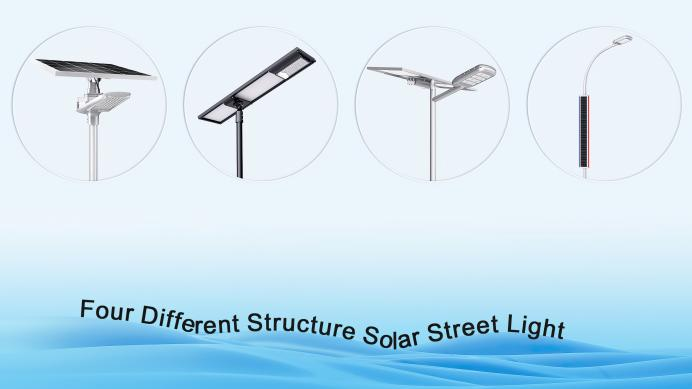
Before comparing prices, B2B buyers should confirm whether the supplier is genuinely aligned with the product type and project category in question. Many companies sell outdoor lighting; fewer are deeply specialized in solar street lighting. On a website, a company offering integrated solar lights, split solar systems, smart solar control products, and general outdoor fixtures may appear comparable to a specialist. In practice, however, the difference in technical depth can be substantial.
A specialized solar street light manufacturer is more likely to understand the relationship between panel sizing, battery capacity, controller logic, local irradiation conditions, and nightly autonomy. That knowledge matters because an apparently acceptable model on paper can fail in the field if the configuration is not built around real operating conditions. Buyers should therefore begin with one question: does this supplier truly understand the type of system my project requires, or are they simply reselling a generic model?
Is the Product Line Truly Specialized?
Product specialization has a direct influence on configuration quality. A company focused on solar street lighting usually has stronger control over system matching: solar panel output, battery storage, LED efficacy, controller settings, and lighting schedules are designed to work together rather than assembled around a headline wattage. That is very different from a general lighting company that has added a few solar models to its catalog simply to meet market demand.
Buyers should look beyond product names and check the actual performance indicators behind the model. Ask about luminous efficacy, energy management logic, battery backup days, and environmental durability. A light advertised as 100 W may still fail to meet project needs if the beam distribution is poor, the battery is undersized, or the controller strategy is simplistic. A professional solar street light manufacturer should be able to explain not just what the product is called, but why a certain configuration works for a certain road width, traffic level, or climate.
Application fit is equally important. A product suited to a municipal road is not automatically suitable for a residential community, parking lot, rural access road, or commercial perimeter. Top solar street light manufacturers usually discuss the project in application terms and explain which system architecture works best for broad roads, low-traffic zones, or sites with limited sunlight. That project-first mindset often signals stronger engineering capability.
Understand the Supplier’s Business Role
Buyers should also clarify whether the supplier is a factory, a trading company, or a hybrid operation. A factory usually offers better production control, more direct technical communication, and stronger customization ability. A trading company may be useful for mixed sourcing, language support, or coordination, but it adds another layer between the buyer and the production line.
A hybrid model can also work well if the supplier is transparent about what is produced in-house and what is outsourced. That transparency matters because it affects delivery time, price clarity, communication speed, and the ability to resolve specification changes quickly. In practical procurement terms, knowing the supplier’s business role helps buyers estimate how problems will be handled once the order moves from quotation to production.
Check Export Experience and Project History
Manufacturer experience should be assessed through operational evidence, not vague claims. Start with years in business, then look at export markets and the customer types they serve. A company that has supplied distributors, participated in government tenders, worked with EPC contractors, or handled large commercial installations is usually better prepared in documentation, packaging, compliance, and delivery coordination.
Export experience is especially important because overseas projects demand more than shipment alone. The supplier needs to understand destination-market standards, prepare complete documentation, and pack products appropriately for long-distance transport. Among solar street light manufacturers, those with a record of successful international delivery often have stronger internal processes and a more realistic understanding of project risks.
Case studies are useful here. Product catalogs show what a company wants to sell; case studies show what it has actually delivered. Review project photos, application types, countries, climates, and system configurations. A best solar street light manufacturer should be able to point to comparable projects, not just offer generic brochures.
What Technical Questions Should Buyers Ask?
1. Battery and energy storage questions
For most solar street lighting projects, battery performance determines whether the system will operate reliably after installation. Ask what battery chemistry is used. In many cases, LiFePO4 batteries are preferred because they offer better safety, longer cycle life, and more stable performance than many alternatives. Buyers should also ask about cycle life, expected replacement intervals, backup days, and whether the battery system is suitable for high- or low-temperature environments. These are not minor details. They directly affect maintenance cost and field reliability.
2. Controller and charging efficiency questions
The controller is the center of the system’s energy management. Buyers should ask whether the light uses MPPT or PWM charging logic. In most projects, MPPT delivers higher charging efficiency and more stable performance. It is also worth asking whether dimming profiles can be adjusted and whether the system supports remote monitoring or smart control. On projects with dispersed installations, remote diagnostics can reduce maintenance effort and shorten fault response time.
3. Lighting performance questions
Lighting quality should never be judged by wattage alone. Ask for actual lumen output, beam angle, recommended pole height, and coverage width. Poor optical distribution can create bright spots and dark patches even when the nominal power looks adequate. For professional projects, buyers should ask whether the supplier can provide Dialux simulations and a lighting layout. That allows the procurement team to verify performance before ordering instead of discovering shortfalls after installation.
4. Structural durability questions
Outdoor lighting only proves itself in real environmental conditions. Buyers should confirm the IP rating for waterproof and dustproof performance, the housing material, corrosion resistance, and wind resistance. This becomes especially important for coastal roads, industrial environments, humid climates, open highways, and storm-prone areas. A responsible solar street light manufacturer should be willing to confirm whether a standard model is suitable for harsh conditions or whether a reinforced specification is needed.
How to Verify Product Quality?
Check the real component configuration
Quality verification should begin with the actual bill of materials. Review the solar panel type and conversion efficiency, battery chemistry and expected life, controller type, LED chip quality, lumen output, housing material, and IP rating. Larger or higher-efficiency panels can improve charging in lower-irradiation regions. MPPT controllers typically outperform PWM controllers in demanding applications. Good LED configuration influences brightness stability as much as the nameplate label does.
Serious buyers compare real component data rather than relying on declared wattage or appearance. In many purchasing decisions, the configuration details reveal more about quality than the front-page quotation.
Ask for technical documents, not only quotations
A quotation shows price. It does not prove quality. Reliable solar street light manufacturers should be able to provide product datasheets, battery test reports, photometric files, waterproof test reports, salt spray reports, and certification documents. These records help buyers verify whether the product meets project standards and site conditions. For example, photometric files are valuable during lighting design review, while salt spray testing is essential for coastal installations.
If a supplier cannot provide this level of technical evidence, the problem may be limited engineering support, weak quality control, or both. For procurement teams, written proof is usually far more useful than polished sales language.
Why Provider Experience Matters?

Experienced manufacturers tend to design systems that perform in reality, not only in a catalog. For B2B buyers, that matters because solar lighting success depends on configuration discipline. A seasoned supplier is more likely to size the system around local sun conditions, balance lighting hours with autonomy, and match design assumptions to actual site conditions instead of relying on a generic template.
Experience also improves problem-solving. A supplier that has delivered in coastal zones, hot climates, rainy regions, or remote off-grid areas usually understands the conditions that influence performance and maintenance. The same applies to adapting systems for different road classifications, mounting heights, and local standards. For buyers, that experience lowers the risk of specification errors and expensive post-installation corrections.
Can the Manufacturer Customize for Your Project?
In project procurement, standard models are often only a starting point. Many buyers need the supplier to adjust wattage, pole height, bracket design, battery capacity, lighting schedules, sensor options, or smart-control features. These are not cosmetic changes. They shape lighting performance, installation cost, and suitability for the actual site.
Commercial customization matters too. Distributors and importers often need brand labeling, packaging adjustments, manuals in local languages, or market-specific product positioning. A top solar street light manufacturers shortlist should therefore include suppliers that can handle both technical and commercial customization with reasonable speed and documentation discipline.
Customization is critical because many projects do not fit a standard product template. Tender specifications may need to be matched exactly. A local market may require a different look, battery reserve, or price-performance balance. Even when the initial quotation is competitive, a supplier that can only offer fixed models may not be a strong fit for project-based procurement.
What Certifications and Compliance Documents Matter?

Technical capability alone is not enough in overseas procurement. Buyers also need documentation that supports shipping, customs clearance, market acceptance, and tender compliance. Common requirements include CE, RoHS, IEC-related reports, and battery transport documentation where applicable.
At the factory level, ISO 9001 remains one of the most relevant quality-management certifications. Buyers may also request internal QC documents and, when possible, factory inspection or audit records. These materials help procurement teams judge whether the supplier has process control, not just presentation skills.
For B2B projects, documentation often matters as much as product performance. Incomplete certification packages can delay shipment, create tender issues, or even block project acceptance. A dependable solar street light manufacturer should be ready to provide these materials early in the evaluation stage.
What After-Sales Support Should a Reliable Supplier Provide?
Clarify warranty terms in detail
A warranty is more than a number on a quotation. Buyers should confirm warranty periods component by component for the LED fixture, battery, controller, and solar panel. They should also ask about replacement conditions, exclusions, claim procedures, and whether technical failure analysis is included when faults occur. Many disputes come from unclear terms rather than product failure alone.
Post-delivery technical support
A reliable manufacturer should continue to provide practical support after shipment. That can include installation guidance, troubleshooting assistance, spare-parts supply, and clear response-time expectations. For some projects, remote technical support is particularly valuable, especially when on-site teams need help adjusting controller settings or diagnosing energy-management issues.
Why after-sales matters even more in export projects
After-sales capability is especially important in overseas projects because the cost of failure is higher. Longer transport cycles slow replacement, and field repairs are usually harder than in domestic work. In public or commercial installations, downtime can lead to safety concerns, complaints, and extra labor costs. This is one reason why the best solar street light manufacturer is rarely the one with the lowest quote alone; strong support saves real money after delivery.
A Practical Evaluation Checklist for B2B Buyers
Supplier Shortlisting Criteria
When comparing different solar suppliers, the goal should be clear: assess not only the product but also project delivery and long-term service. Beyond price, buyers should carefully consider factors such as the supplier’s years of experience, main product categories, actual factory production capacity, certifications, sample quality, customization capabilities, warranty terms, technical support, and delivery timelines. From these, it is useful to identify primary and secondary factors to guide a comprehensive evaluation.
First, from a procurement perspective, a supplier’s experience reflects their level of professionalism. Experienced suppliers have a clear advantage over those who only provide products without broader project support. Second, a factory’s production capacity—including factory size, actual output, production lead times, internal engineering support, and quality control systems—is especially important when orders involve strict project timelines or repeated procurement.
Third, sample quality is critical. Strong suppliers generally provide samples and confirm specific product requirements with clients before mass production, ensuring product quality while verifying controller settings, charging characteristics, and packaging protection. Finally, customization capabilities are the clearest demonstration of a supplier’s R&D and design strength. In many B2B projects, standard products alone cannot meet all requirements. Customization may involve adjustments to pole height, battery capacity, lighting modes, sensor options, and even packaging to meet tender specifications or local market expectations. This level of customization reflects substantial production capabilities, which smaller companies often cannot provide.
Below is a concise screening table that can be copied into internal evaluation forms.
Category | What to Check | Why It Matters | Priority |
Specialization | Solar-only or mixed catalog? | Shows technical depth | High |
Components | Panel, battery, LED, controller details | Determines actual performance | High |
Documentation | Datasheets, tests, certifications | Reduces compliance risk | High |
Customization | Power, pole, battery, smart control | Improves project fit | Medium |
After-sales | Warranty, spare parts, response time | Lowers lifecycle risk | High |
Recommended Supplier Example: RoadSmart
Applying the same evaluation logic, RoadSmart demonstrates several advantages that align closely with B2B project requirements. As a professional solar street light manufacturer, RoadSmart has over 15 years of industry experience, with sales and service networks covering more than 120 countries worldwide and over 400 cities and counties in China. Its broad experience allows it to provide solar lighting solutions tailored to any client need.
In terms of product portfolio, RoadSmart offers a mature and comprehensive range, including integrated solar street light systems, MPPT integrated solar lights, split-type solar street lights, solar poles, as well as solar controllers and energy storage products. This nearly covers all solar street light product lines, allowing clients to find almost any desired product or have solutions customized for specific projects.
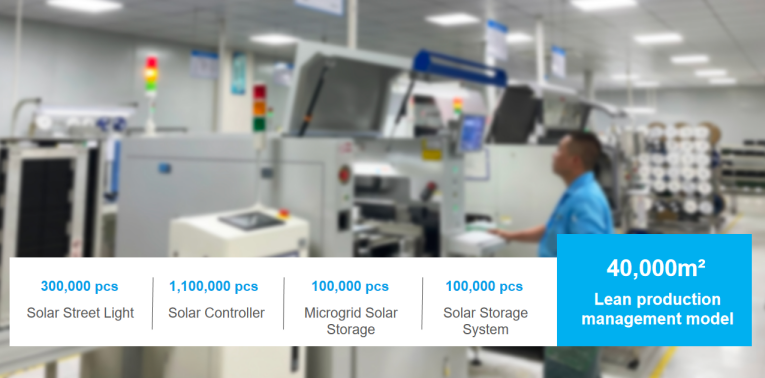
RoadSmart’s product expertise reflects its manufacturing and R&D capabilities. The company employs 400 staff members, including over 100 in-house R&D and innovation teams, representing about 30% of the total workforce. To date, the company has secured more than 250 patents across solar street lighting technologies, leading in many technical areas, such as 3.2V high-power solar street light solutions, 99.9% multi-peak MPPT efficiency, IPC 5.0 intelligent power control, and smart monitoring via apps or PC. Its 40,000 m² production base produces up to 300,000 street lights annually, maximizing service delivery reliability.
Another key highlight is RoadSmart’s customization and export capabilities. The company’s recently released global strategy emphasizes ODM support for parameters, structure, and appearance, particularly targeting markets in Africa, Southeast Asia, and South America. Coupled with ISO9001, ISO14001, ISO45001, CE, RoHS, FCC, CQC, and IEC certifications, this provides buyers with clear evidence for evaluating product compliance and supplier credentials.
Conclusion
Choosing asolar street light manufacturer should be treated as a strategic supplier decision, not just a product comparison. For B2B buyers, the priorities are clear: reliable quality, relevant project experience, transparent specifications, workable customization, complete documentation, and dependable after-sales support. The safest process is to build a shortlist, request samples, compare technical and commercial details one by one, and judge suppliers by total project value rather than headline price alone.
That approach gives buyers a better chance of selecting a partner that can support the project before delivery, during production, and after installation. Among solar street light manufacturers, the strongest suppliers are the ones that combine engineering realism with responsive service. If your team is planning an outdoor lighting project, use this framework to compare options carefully and identify the best solar street light manufacturer for your specific application, budget, and operating environment.
Table of Contents