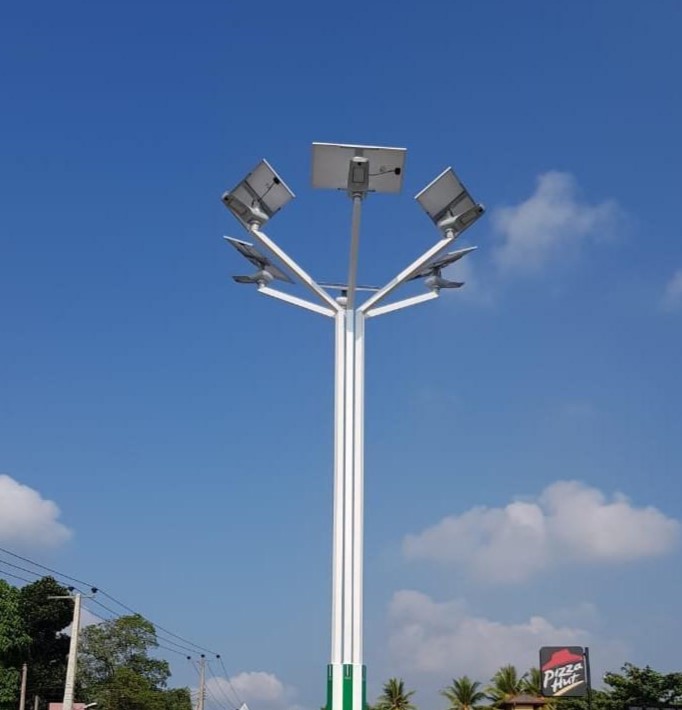
How IoT Powers Smart City Street Lighting Networks
Feb 26, 2026
Read:22
Source:
As cities expand and infrastructure becomes more connected, street lighting is no longer just about switching lights on at dusk and off at dawn. Today, IoT-powered smart city street lighting transforms lighting networks into responsive, data-driven systems that improve energy efficiency, maintenance visibility, and public safety.
In a traditional setup, street lights operate as isolated assets. In an IoT-enabled network, every light can become a connected system that is able to communicate, respond, and report. This is what allows a modern smart street lighting system to move beyond illumination and become part of a broader smart city platform.
What IoT Means in Street Lighting
Nowadays, It's no wonder that, the Internet of Things (IoT) refers to a network of physical devices connected through communication technologies that allow them to collect, send, and receive data. If you work, experience or study in street lighting, you prabably know that luminaires, controllers, sensors, and management software can all work together as one fascinating integrated system.
Instead of being manually inspected or controlled only by a local timer, a connected smart street light control system can remotely manage each fixture or group of fixtures. It can track operating status, monitor energy use, detect faults, and adjust light output based on real-world conditions. This is the foundation of intelligent street lighting, as follows.
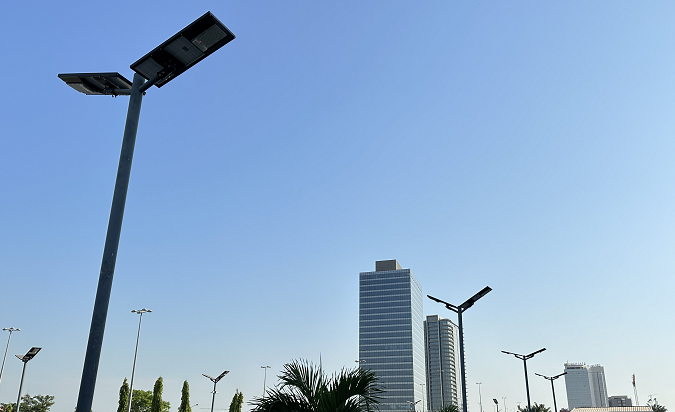
How IoT Works in a Smart Street Lighting Network
An IoT-enabled smart street lighting system usually includes four core layers:
1. Connected Luminaires
At the field level, each smart LED street light acts as a lighting asset equipped with a controller or physical node. This allows the fixture to be remotely managed and monitored.
2. Sensors and Local Intelligence
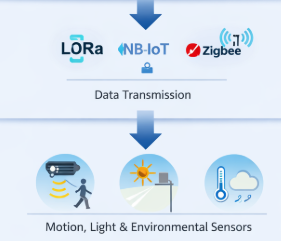
Sensors such as motion detectors, ambient light sensors, traffic counters, or environmental sensors provide real-time input. These devices allow the system to respond dynamically instead of following a fixed lighting pattern.
3. Communication Network
IoT communication technologies—such as LoRa, NB-IoT, Zigbee, or cellular connectivity—carry data between field devices and the platform. This communication layer is what turns separate street lights into a true network.
4. Central Management Platform
The smart street light management system is the software dashboard where operators can see assets on a map, check status, push schedules, review alarms, and analyze system performance.
Together, these layers form the operational backbone of smart city street lighting.
What IoT Enables in Smart Street Lighting
IoT does not simply make street lights “remote-controlled.” It changes the entire operating model of outdoor lighting.
| Real-Time Monitoring | Remote Control | Adaptive Lighting | Fault Detection and Maintenance Alerts | Energy Data and Analytics |
| IoT allows operators to view the live status of each light or each zone. Instead of waiting for a public complaint, the system can automatically show whether a fixture is online, dimmed, disconnected, or malfunctioning. | A connected smart street light control system allows operators to switch fixtures on or off, apply dimming schedules, create lighting scenes, and manage zones from a central location. | With sensor integration, IoT enables intelligent street lighting that responds to real conditions. Lights can brighten when vehicles or pedestrians are detected and dim when roads are quiet. This improves energy efficiency without sacrificing visibility. | A major advantage of IoT is the ability to identify problems early. A failed driver, communication loss, power anomaly, or abnormal operating pattern can trigger an alert inside the smart street light management system, allowing maintenance teams to act faster. | IoT-powered lighting networks generate data on energy consumption, dimming levels, runtime, and equipment performance. This helps project owners measure savings, optimize schedules, and plan maintenance more effectively. |
Why IoT Matters for Smart City Street Lighting
1. It Reduces Energy Waste
Traditional street lights often run at full brightness all night, whether roads are busy or empty. IoT makes it possible to adjust output by time, zone, traffic, or activity level. In a large smart street lighting network, that creates substantial energy savings.
2. Simper Maintenance
In a conventional network, operators may not know a fixture has failed until someone notices it. In an IoT-enabled intelligent street light control system, failures are visible remotely. This reduces patrol inspections and unnecessary maintenance visits.
3. It Supports Better Lighting Decisions
IoT data helps cities understand how lighting is actually being used. Instead of blind , operators can adjust dimming profiles and schedules based on measured performance and traffic behavior.
4. It Creates a Smart City Platform
Street lights are among the most widespread public assets in a city. Once connected, they can become mounting points or service nodes for additional smart-city devices such as cameras, environmental sensors, traffic monitors, and emergency systems. This makes smart city street lighting one of the most scalable entry points into broader urban IoT.
IoT and the Smart Street Light Management System
The software platform is where IoT becomes useful to operations teams. A professional smart street light management system typically provides:
Asset mapping and grouping
Real-time device status
Alarm and fault records
Scheduling and dimming control
Energy consumption reporting
Maintenance history
Permission-based access for different users
Without IoT, this level of visibility is impossible. while through IoT, our lighting becomes measurable, traceable, and much easier to manage at scale.
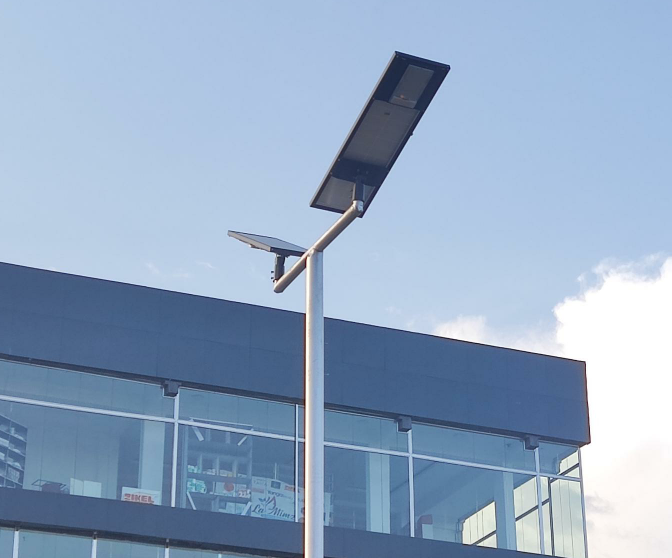
IoT in a Smart Street Light Project
For a smart street light project, IoT should not be treated as an extra add-on. It should be part of the project strategy from the beginning. That means considering:
Which communication technology is most suitable
Whether the project needs individual or group control
What kind of sensors are necessary
How the platform will be used by real operators
Whether the project may expand into wider smart-city functions later
A successful intelligent street light project uses IoT to solve real problems—not just to add complexity.
IoT and Solar Smart Street Lighting
IoT is also highly valuable in solar powered applications. In a solar-based smart street lighting system, remote monitoring can track full circle battery health, charging status, runtime, and controller performance. This is especially useful in remote or off-grid projects, where manual inspection is rather difficult.
For solar deployments, IoT helps:
Protect battery life through better profile management
Improve uptime through early fault detection
Optimize dimming during cloudy periods
Reduce field visits in remote areas
This makes IoT a strong enhancement in any intelligent street lighting system project that includes solar power.
Challenges to Consider
Although IoT brings major advantages, a few issues must be planned carefully:
Network Reliability
Communication is critical. A weak network can reduce the value of the system, so the communication method must match the site conditions.
Cybersecurity
Any connected infrastructure needs proper user control, encrypted communication, and secure update practices.
Operational Simplicity
A smart street light management system should make maintenance easier, not more complicated. The software must be usable by real operations teams.
Scalable Design
An IoT lighting network should be able to expand over time as the city or site grows.
The Future of IoT in Intelligent Street Lighting
IoT will continue to push intelligent street lighting toward greater autonomy and integration. Over time, we can expect:
More advanced adaptive dimming logic
Better traffic- and weather-responsive scenes
Closer integration with public safety systems
More detailed analytics and predictive maintenance
Easier interoperability with broader smart-city infrastructure
As this happens, the role of lighting will continue to evolve—from a utility expense to a connected urban asset.
Conclusion
IoT is what gives smart street lighting its intelligence. It connects luminaires, controllers, sensors, and software into a unified network that can monitor itself, respond to changing conditions, and support better decision-making, which also attaches great importance to smart city construction. In practical terms, it allows a smart street light control system to reduce energy waste, improve maintenance efficiency, and form the backbone of scalable smart city street lighting.
For any municipal transportation, public landscape or urban functional zones, planning a smart street light project or intelligent street light project, IoT is not just a technology layer or simple slogan. Instead, it is the enabling force that turns lighting into a responsive, manageable infrastructure network. It is our responsibility to promote more projects globally. Know more about Roadsmart now!
Table of Contents