Residential Street Lights: What It Is and Why It Matters
Feb 10, 2026
Read:19
Source:
Residential street lighting is the planned use of roadway luminaires to illuminate neighborhood streets, intersections, sidewalks, and community access roads. Unlike highway lighting, built for higher speeds and wider lanes, residential street lights are designed for comfort, visibility, and livability. The best residential approach improves nighttime safety for drivers and pedestrians while controlling glare and limiting light spill into windows, so a neighborhood feels secure without looking overlit. A well-specified residential street light focuses on controlled distribution, good uniformity, and low glare.
What Residential Street Lighting Includes
A complete residential street lighting plan typically covers three connected needs:
Roadway visibility for vehicles on local streets and collectors
Pedestrian visibility along sidewalks, pathways, and crossings
Higher-risk points such as curves, T-junctions, entrances, and intersections
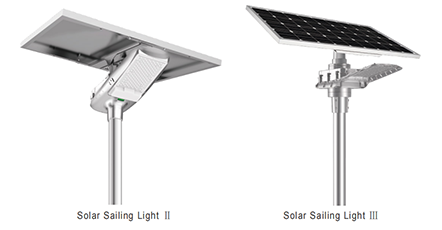
Modern systems most often use LED residential street lights with optics that place light where it matters, on pavement and walkways, rather than scattering it into the sky or into nearby homes.
What Residential Street Lighting Is Not
Residential lighting is often confused with other outdoor lighting types. These differences matter because each category uses different optics and design targets:
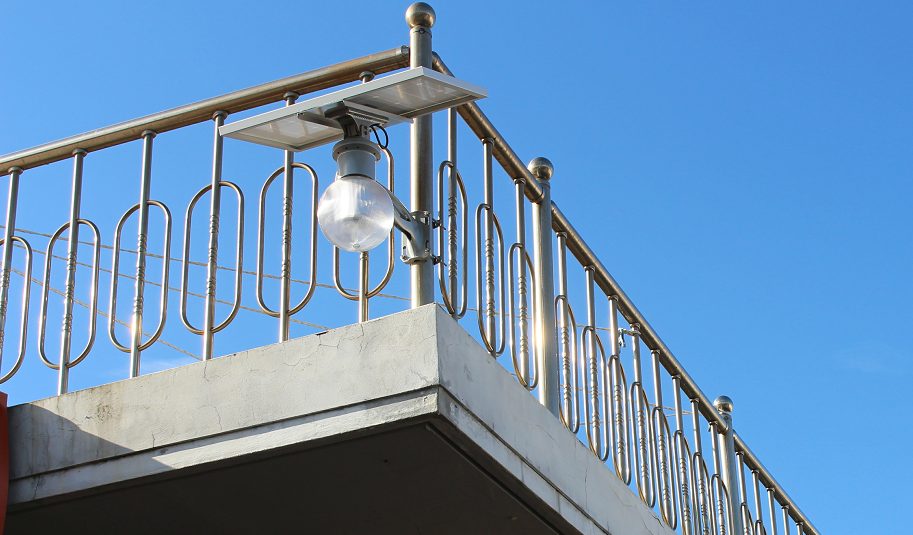
Decorative post-top lighting may look attractive, but often provides weaker roadway performance.
Parking-lot lighting is engineered for wide open areas, not narrow streets.
Highway/arterial lighting can be harsher and higher-output than most residential environments need.
Why Street Lights Matter in Residential Areas
1.Safer driving on local streets
Neighborhood hazards, pedestrians crossing mid-block, cyclists with limited reflectors, driveways, parked vehicles blocking sight lines, which are easier to detect when lighting is consistent. Good residential street lights improve recognition and reaction time, especially near intersections and curves.
2.Better pedestrian comfort and perceived security
People are more willing to walk at night when sidewalks and crossings are evenly lit and visibility feels natural. Proper lighting supports daily community movement—dog walks, school routes, transit stops—without flooding private property.
3.Reduced opportunities for unwanted activity
Lighting helps discourage opportunistic behavior by increasing visibility and supporting natural surveillance. The goal is not maximum brightness; it's appropriate brightness with strong uniformity, so there are fewer dark pockets.
4.Clear wayfinding and neighborhood quality
Residential lighting improves navigation near entrances, signage, speed-calming features, and turns. It also shapes how a neighborhood feels after dark—professional, cared-for, and safe.
5.Fewer complaints when glare and spill are controlled
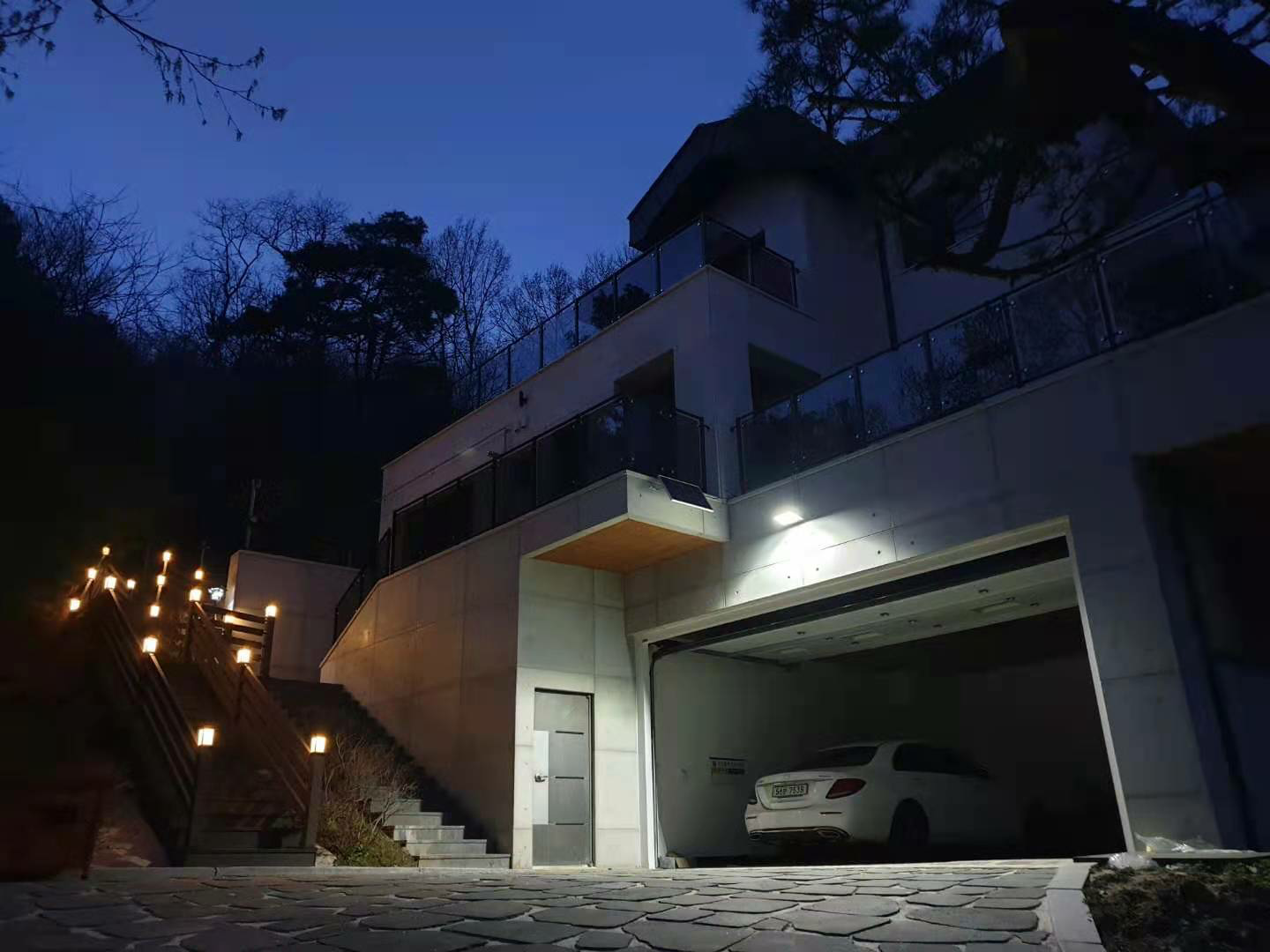
Overly bright fixtures, incorrect optics, or tilted heads can cause glare for drivers and light trespass into homes. High-quality optics, correct mounting, and shielding options allow residential street lamps to deliver visibility without disturbing residents.
What Good Residential Street Lighting Looks Like
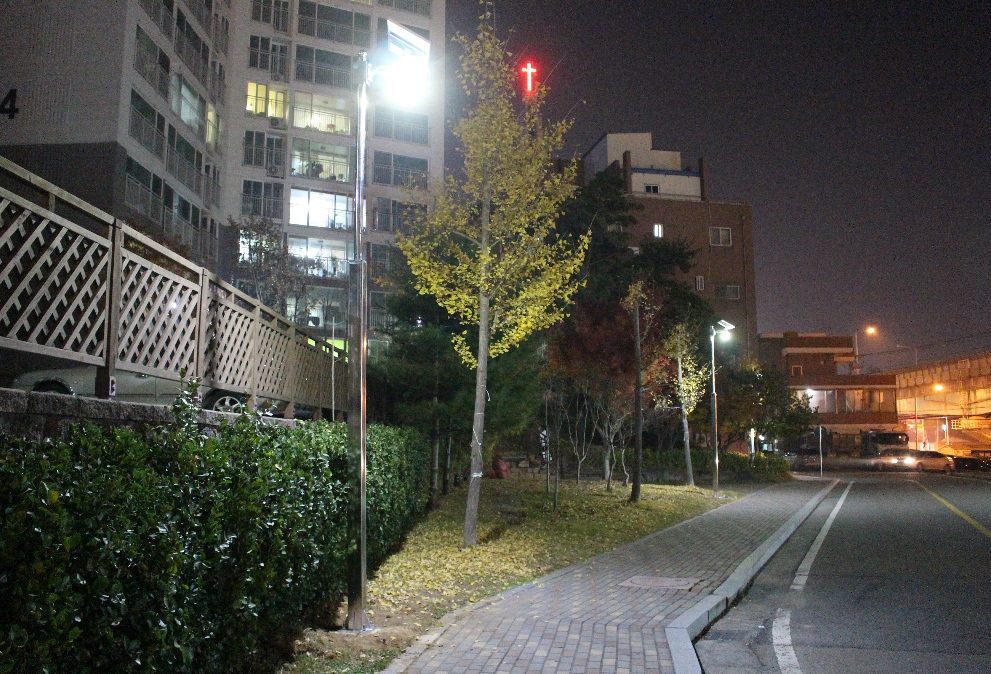
A strong residential plan usually delivers:
Uniform illumination along streets and pedestrian routes
Low glare for driver comfort
Minimal light trespass beyond property lines
Reliable operation through weather and seasons
Predictable maintenance with modern LED systems and controls
This is achieved by matching pole height and spacing to the roadway geometry, selecting the correct optical distribution, and using sensible control profiles, especially important for residential solar street lights.
Residential Street Lighting Standards
While residential street lighting standards vary by country and municipality, most focus on the same fundamentals:
Target illuminance appropriate for local streets and pedestrian areas
Uniformity limits to prevent dark patches
Glare control and cut-off optics
Light trespass limits near homes and property lines
Structural safety (wind load, corrosion resistance)
Reliability and maintenance requirements
For any project, the correct path is to confirm local requirements, then use photometric planning to meet them.
Practical Questions People Ask
1) How Many Watts Is a Residential Street Light?
For residential street lighting, wattage alone is not the right way to specify performance. What matters is delivered lumens, optics, mounting height, spacing, and uniformity. Still, typical wattage ranges for LED residential street lights are:
Local streets / lower traffic: ~20–60 W
Residential collectors / wider streets: ~60–120 W
Intersections, crossings, curves: often 80–150 W
For residential solar street lights, the LED wattage is usually paired with dimming profiles to protect battery autonomy—meaning the system may run at reduced output late at night and brighten when activity is detected.
How Tall Are Residential Street Lights?
A typical residential street light pole height is:
4–6 m (13–20 ft): narrow neighborhood streets, paths, low-speed zones
6–8 m (20–26 ft): common range for most residential roads
8–10 m (26–33 ft): wider collectors and entrances where coverage needs are higher
Taller poles can reduce the number of poles needed, but glare control becomes more important. The right height depends on street width, tree canopy, nearby homes, and your glare/trespass limits.
Are Street Lights Important in Residential Areas?
Yes. Residential street lighting supports safety, comfort, and community function. It improves driver visibility, increases pedestrian confidence, and reduces dark pockets that create complaints or perceived risk. When designed correctly—with cut-off optics and careful placement—residential lighting improves safety without becoming intrusive.
How Many Street Lights Should Be in a Residential Area?
There is no universal “number,” because design is driven by pole spacing and photometrics. A practical starting point is:
Typical spacing: about 3–4× the mounting height, assuming roadway-appropriate optics
Example: 6 m pole → spacing often begins around 18–24 m
Example: 7 m pole → spacing often begins around 21–28 m
Final spacing should be confirmed with a photometric plan that accounts for:
Road width and sidewalk presence
Curves, intersections, crosswalks, and entrances
Tree shading and building setbacks
Required residential street lighting standards and local ordinances
Glare/trespass limits near homes
In short: the right number of residential street lights is the number needed to meet uniformity and comfort—not an arbitrary count per block.
What Type of Bulb Are Residential Street Post Lights?
Most modern residential street lamps use integrated LED fixtures, not replaceable “bulbs.” Legacy neighborhoods may still have:
HPS (High-Pressure Sodium)
Metal Halide
(Older) Mercury Vapor in some regions
But new builds and serious upgrades now favor LED residential street lights because they deliver better optical control, higher efficiency, longer service life, and easier dimming and smart-control compatibility. Decorative post-top lights sometimes still use replaceable LED lamps, but for roadway performance and uniformity, integrated fixtures are the professional standard.
Consederation of Solar Residential Street Lighting
Residential solar street lights are especially effective when trenching is expensive, power access is limited, or sustainability goals are high. The key is correct site evaluation, especially shading from trees and buildings—and conservative energy design for the lowest-sun month. When specified correctly, solar systems can deliver reliable dusk-to-dawn lighting with motion-adaptive profiles that protect autonomy.
Common Mistakes to Avoid
Choosing fixtures by watts rather than delivered light and distribution
Ignoring glare and light trespass near homes
Designing only for the pavement and forgetting vertical light on sidewalks
Under-sizing solar or overlooking shade from trees/buildings
Poor pole selection without proper wind/corrosion considerations
Running at 100% output all night with no dimming strategy
The End
Residential street lighting is not just installing poles, however it is a safety and livability system. Well-designed residential street lights improve driver and pedestrian visibility, support neighborhood security and wayfinding, reduce complaints through glare control, and lower lifecycle costs with LED and smart controls. Whether grid-powered or residential solar street lights, success comes down to the right optics, placement, and operating profile. The last but not least, matched to local standards and real neighborhood needs, this is the very help we can offer.
Table of Contents