Ultimate Guide to Parking Lot Lights
Jan 23, 2026
Read:47
Source:
Well–planned parking-lot lighting improves safety, reduces liability, guides drivers and pedestrians, and protects nearby neighborhoods from glare and light trespass. Today's market is dominated by LED parking lot light fixtures and fast-growing solar parking lot lights that deliver high efficacy, smart controls, and long service life. This guide walks you through every major decision, from selecting outdoor parking lot lights and poles, to photometric design, controls, installation, codes, and maintenance—so you can specify or buy with confidence.
Parking-lot Lighting Terms
You'll see multiple phrases used interchangeably online. They're not quite the same:
Lamps are replaceable sources (e.g., HID bulbs or screw-in LEDs). Today, most sites specify integrated LED parking lot light fixtures—complete luminaires with permanent LED boards, engineered optics, and sealed drivers. For new builds or serious retrofits, choose commercial grade solar lights fixtures over screw-ins to gain superior photometrics, durability, controls readiness, and stronger warranties.
Solar Powered Parking Lot Lights
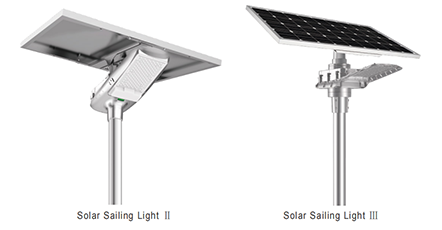
Available as all-in-one or split designs, these systems pair PV panel(s), an MPPT controller, LiFePO₄ battery, and an LED luminaire on a pole. They eliminate trenching and utility bills, install quickly, and anchor modern commercial solar lighting for parking lots—with motion-adaptive profiles that extend nightly autonomy in low-sun conditions.
What Performance Actually Matters
When comparing parking lot lamps and fixtures, firstly look beyond watts.
Delivered Lumen Output & Efficacy
Specify the usable luminaire lumens and overall efficiency so target illuminance is met with the smallest practical PV and battery set. Higher efficacy lowers solar sizing, weight, and lifecycle cost.
IES Photometric Distribution
Select Type II–V optics matched to road geometry and pole spacing to deliver predictable coverage at level aim. Proper distributions reduce fixture count and avoid tilting that can increase glare.
Pavement & Vertical Uniformity
Design for balanced avg:min on the pavement and adequate vertical illuminance near walkways and cameras. Good uniformity eliminates hotspots and dark patches, improving safety and visibility.
Color Quality (CCT & CRI)
Choose CCT appropriate to context (e.g., residential, campus, arterial) and CRI sufficient for identification and camera clarity. Balanced color choices enhance comfort without raising glare.
Glare Management & BUG Compliance
Use cut-off lensing, low high-angle intensity, and perimeter shields to meet local BUG/trespass limits and dark-sky goals. Controlled optics keep light where it’s needed and neighbors satisfied.
Environmental Sealing & Surge Protection
Specify outdoor-rated housings with UV-stable lenses, corrosion-resistant finishes, and robust surge immunity for reliable field life. Durable construction preserves output and reduces service visits.
Controls & Smart Readiness
Include photocell, dimming, and motion profiles as standard, with optional IoT nodes for grouping, scheduling, telemetry, and alerts. Adaptive control extends nightly autonomy and simplifies fleet management.
For solar powered parking lot lights, also evaluate right-size the PV array and use an MPPT controller with multi-peak tracking to sustain harvest under partial shading or soiling. Select Grade-A LiFePO4 batteries and size capacity to worst-month irradiance and the required autonomy, typically 3–5 nights. Finally, program bi-level, motion-responsive profiles to extend runtime in cloudy seasons and reduce battery stress.
Fixture Families for Parking Areas
a) Pole-mounted area luminaires (rectangular heads)
The backbone for most commercial parking lot lighting. Available with multiple distributions, lumen packages, and mounts (slipfitter, arm, trunnion, tenon).
b) Floodlights
Useful to “fill” corners and facades or aim at drive entries. Choose cut-off optics to control spill.
c) Wall packs / building-mounted
Light perimeters and walkways along building edges. Full cut-off, shielded optics help reduce trespass.
d) Post-tops
Decorative poles for campus, mixed-use, and pedestrian plazas. Specify versions with internal glare control and well-defined cut-off.
e) Canopy & garage luminaires
For covered parking structures: symmetric low-glare optics, integrated motion sensors, and high CRI for cameras.
f) Solar parking lot lights
All-in-one, integratedor split types. Great where trenching is expensive, power is unavailable, or sustainability targets are central.
Relation between Poles, Foundations and Wind
The best luminaire fails if the pole isn't engineered for your site.
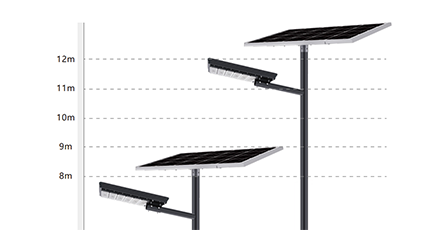
Heights: 4–12 m (12–40 ft) common. Higher poles reduce pole count but may raise glare if lenses aren't shielded.
Materials: powder-coated galvanized steel (most common), aluminum (corrosion-resistant, lighter), or fiberglass (non-conductive, coastal).
EPA / wind load: Work with stamped calculations. Include the effective projected area of luminaires, brackets, banners, and for solar systems: PV panels.
Foundations: Anchor-bolt cages and concrete bases sized to soil and wind. Respect embedment depths and bolt patterns.
Corrosion: Coastal zones benefit from hot-dip galvanizing + marine-grade coatings or aluminum with robust finishes. Add base covers to reduce splashback corrosion.
Color temperature, CRI, and Visual Comfort
CCT: 3000K for residential adjacency and dark-sky ordinances; 4000K a balanced “neutral white”; 5000K for crisp visibility and cameras in higher-security areas.
CRI: 70–80 is typical in lots; 80+ improves color recognition (beneficial for security and retail environments).
Glare: Choose optics that control high-angle brightness, add shields where needed, and avoid tilting heads above level unless photometrics demand it.
Off grid vs on grid solar: which is right for your site?
Hybrid
Grid + solar as a resilience or peak-shave strategy; or grid-assist solar for sites with occasional long cloudy spells
When evaluating commercial solar lighting for parking lots, ask vendors for:
Worst-month energy model (sun hours, derates, autonomy nights)
Battery chemistry (Grade-A LiFePO₄ recommended), cycles, and serviceability
Controller specs (true MPPT, multi-peak tracking, protections)
Wind load and structural details with PV considered
Grid-tied LED
Highest lumen density per pole; no autonomy limits
Best for shaded sites or dense urban canyons
Requires trenching, switchgear, and monthly utility bills
Solar parking lot lights (all-in-one or split types)
Zero trenching and no energy bills; rapid deployment
Ideal for remote lots, new developments, campuses, parks, and ESG-driven projects
Design drivers: worst-month sun hours, shading, PV area, battery capacity, control profiles
Parking lot solar lighting works best with motion-adaptive dimming and proper panel orientation/tilt
How to design a parking-lot layout
Set goals & constraints
Safety level, camera coverage, light-trespass limits, dark-sky objectives, aesthetics, budget, schedule.Survey the site
Measure lot dimensions, drive aisles, landscaped islands, building edges, and property lines. Note utility routes, shading (trees, structures), and prevailing winds (for PV).Pick pole height & distribution
Start with 6–9 m (20–30 ft) for most retail/campus lots. Select Type II/III for rows, Type IV for perimeter throws, and Type V for central islands.Select commercial grade LED parking lot lights
Choose lumen packages to hit the target average illuminance and good uniformity with minimal glare. Confirm IP/IK, surge, and control readiness.Photometric study
Run point-by-point calculations (Dialux/AGi32) for horizontal and key vertical planes, refine pole locations, and add shields where property lines or windows are sensitive.Glare & BUG check
Ensure fixture BUG ratings and high-angle luminance meet ordinances.Controls plan
Photocell + dimming schedules + motion zones. For solar powered parking lot lights, tune profiles for seasonality.Neighbor & wildlife considerations
Lower CCT near residences; amber or filtered options in wildlife corridors as required by code.Finalize pole, base, and finishConfirm EPA at worst wind speed; specify coatings for corrosion; anchor-bolt templates and bolt circle.
Retrofitting HID to LED Solar Street Light
Modernizing from HID to LED cuts power while maintaining or improving actual illumination. Replace 250–1000 W HID heads with ~80–350 W commercial-grade LED fixtures to gain engineered optics, sealed drivers with surge protection, and unified warranties. Opt for full-fixture upgrades rather than lamp-only swaps, and check rebate eligibility (often DLC-linked); adding networked controls (scheduling, dimming, monitoring) can unlock additional incentives and operational savings.
When stepping from LED to solar, target off-grid autonomy and total-cost advantages. Convert rows or entire sites to solar powered parking lot lights to avoid trenching, meters, and monthly utility charges, and to accelerate deployment. For split-type systems, position PV modules in the best sun; for all-in-one units, set proper tilt/azimuth and mitigate shading. Evaluate decisions on life-cycle economics—not unit price—to capture long-term resilience and OPEX benefits.
Installation & commissioning checklist
Before delivery
Verify pole base locations, conduit stubs (if grid), and bolt circles.
Assembly
Torque anchor nuts to spec; plumb poles.
Mount brackets/tenons and luminaires; set level aim (avoid tilt unless photometrics call for it).
For solar: mount panels securely, confirm tilt and azimuth, connect color-keyed harnesses with waterproof plugs.
Electrical / controls
Confirm line voltage, ground, and surge modules.
Install photocells or control nodes; enroll networked controls (grouping, schedules).
For solar: commission controller profiles (standby level, motion sensitivity, seasonal profiles).
Test
Walk the lot at night; verify uniformity, hotspots, glare at entrances, and shield effectiveness.
Check property-line illuminance.
Maintenance plan
Clean lenses & sensors (annually or as environment dictates).
Inspect gaskets, powder coat, and fasteners; replace cracked lenses or seals.
Check drivers & surge modules during scheduled visits; swap before failure in critical sites.
Controls health – verify nodes report; update firmware.
For solar parking lot lights: panel cleaning, connector checks, and periodic battery health assessment; plan a mid-life battery refresh based on cycles and climate.
Sustainability and dark-sky practices
Choose optics with U0 uplight where feasible; specify shielding on perimeters.
Consider 3000K near homes and in dark-sky communities.
Use motion-adaptive dimming to cut energy and nighttime sky glow.
Solar systems provide measurable carbon reductions—use dashboards to report ESG metrics.
Procurement & specification checklist
When soliciting quotes or writing a spec for commercial parking lot lights or commercial solar lighting for parking lots, include:
Lumens & distributions (Type II–V), photometric files (IES), and target levels
CCT & CRI; dark-sky/BUG requirements, glare limits
Efficacy (lm/W), driver type, THD/Power Factor
IP/IK ratings; 10–20 kV surge
Mounting type (arm/tenon/slipfitter), tilt limits, and accessory shields
Controls: 0–10V or D4i; NEMA/ Zhaga receptacle; photocells/motion nodes
Warranty (5–10 years); DLC/UL listings and required certifications
Poles: height, material, base plates, anchor bolts, EPA at design wind speed, coating system
For solar: PV watts, MPPT controller features, battery chemistry/capacity/cycles, autonomy nights, worst-month model, structural calcs with PV
Common mistakes
Specifying Watts Instead of Light Output & Optics
Don't size by wattage alone. Specify lumens and the correct distribution type (II–V) to avoid over/under-lighting and patchy uniformity.Overlooking Glare and Light Trespass
Control high-angle brightness with low-glare optics, keep heads level (lower tilt), add shields, and use perimeter-friendly distributions.Ignoring Vertical Illuminance
Design for more than pavement lux. Provide vertical light near pedestrian routes and cameras to improve recognition and safety.Under-Sizing Solar or Ignoring Shade
Model to worst-month sun hours with margin, mitigate shading, and apply adaptive profiles to maintain autonomy through cloudy periods.No Wind (EPA) Accounting for Poles
Poles fail first when EPA is wrong. Include luminaires, brackets, banners, signage, and PV in the wind calculation and use stamped designs.Skipping a Controls Strategy
Running at 100% all night wastes energy and raises complaints. Add photocells, curfews, and motion zones (bi-level dimming) to match real usage.
Example layouts
Retail pad (small lot):
6–8 m (20–26 ft) poles along the perimeter, Type III distributions throwing inward; one or two central poles Type V to even the middle.
4000K, low glare optics, photocell + motion dimming late night.
Campus block lot:
9–10 m poles on islands, Type V or VS in center rows, Type III on edges.
3000–4000K depending on neighborhood, networked controls with curfews.
Solar cluster (remote lot):
6–8 m solar powered parking lot lights, bi-level profiles (20–30% standby; 100% on motion), panels oriented for best sun.
Ensure PV clear of trees/buildings; verify autonomy for the rainy season.
Frequently asked questions
Q1: What's the difference between LED parking lot lamps and LED parking lot light fixtures?
Lamps are replaceable sources; fixtures are integrated luminaires with boards, optics, driver, and housing. New parking lots should use commercial grade LED parking lot lights (integrated fixtures) for optics, reliability, and warranty.
Q2: What color temperature should I choose?
4000K is a balanced default for many outdoor parking lot lights. Use 3000K near residences/dark-sky zones; 5000K where maximum visual acuity and camera performance are priorities.
Q3: How tall should poles be?
Commonly 6–10 m (20–33 ft). Taller poles mean fewer poles and better spacing but require tighter optical control to minimize glare. Match height to lot size and distribution.
Q4: Are solar parking lot lights bright enough?
Yes—when properly sized for worst-month sun, with MPPT controllers, high-efficiency LEDs, and motion-adaptive profiles. Poorly sized systems (or shaded panels) underperform.
Q5: What's the payoff moving from HID to LED?
Energy drops 50–75% with reduced maintenance. With controls, savings improve further. Typical payback is a few years, often faster with rebates.
Q6: Can I mix grid-tied and solar lighting in the same lot?
Absolutely. Many sites use grid luminaires in high-activity cores and parking lot solar lighting on perimeters, outparcels, or new expansions where trenching is costly.
Q7: Do I need networked controls?
Not always—but photocells plus scheduled dimming are a must. Networked controls add asset tracking, fault alerts, and energy analytics, and may unlock additional utility incentives.
Q8: What about wind and storms?
Specify poles and brackets with stamped EPA/wind calculations. In lightning-prone regions, add higher surge protection (20 kV). For solar parking lot lights, ensure panel mounting and hardware meet wind-load requirements.
Q9: How long do batteries in solar systems last?
Quality LiFePO₄ packs typically provide several thousand cycles. Life depends on climate, depth of discharge, and controller strategy. Plan and budget a mid-life battery refresh.
Q10: Can I use warm light and still meet safety goals?
Yes—use good uniformity and sufficient average illuminance. Warm CCT reduces perceived glare; couple it with optics that control high-angle brightness.
Q11: Are there wildlife or dark-sky restrictions?
Many municipalities limit CCT and uplight. Use low-uplight optics, shielding, curfews, and appropriate CCT. Coastal/wildlife areas may require amber or filtered sources.
Q12: What makes a luminaire“commercial grade”?
High-quality LEDs and drivers, robust thermal design, real surge protection, outdoor-rated gaskets and finishes, tested optics, listings (UL/DLC), controls readiness, and a strong warranty—all hallmarks of commercial grade LED parking lot lights.
Putting it all together
Choosing and deploying the right parking lot lights is part art and part science. Start with safety and code goals, select parking lot lighting fixtures that deliver the required light with low glare, engineer poles that survive your wind and climate, and add controls that respect neighbors and save energy. Where power is scarce or sustainability is paramount, solar powered parking lot lights and broader commercial solar lighting for parking lots provide a trench-free path with long-term OPEX savings. With a solid maintenance plan and smart controls, your lot will be safer, easier to navigate, and far less costly to run.
If you'd like a specification checklist or a quick photometric concept for your site, share the lot dimensions, mounting heights, and any constraints. So that I can draft a starter layout and control strategy tailored to your project.
Table of Contents