

Andi Seabeck
FACILITY MANAGEMENT MARKET LEADER
Andi Seabeck is a seasoned sales solution specialist with 20 years of experience in commercial and industrial settings. Andi received her bachelor’s degree from Oklahoma State University in Business Administration. Andi has won numerous awards throughout her sales history including, Presidents, Summit, Emerging Talent, Platinum, Rookie of the Year, and Diamond. She attributes this success to her ability to go beyond transactional selling and to listen and learn what the true need of the customer is.
Mobile: 918-927-1593
Email: aseabeck@camcode.com


The Pros and Cons of All-in-One Solar Street Lights
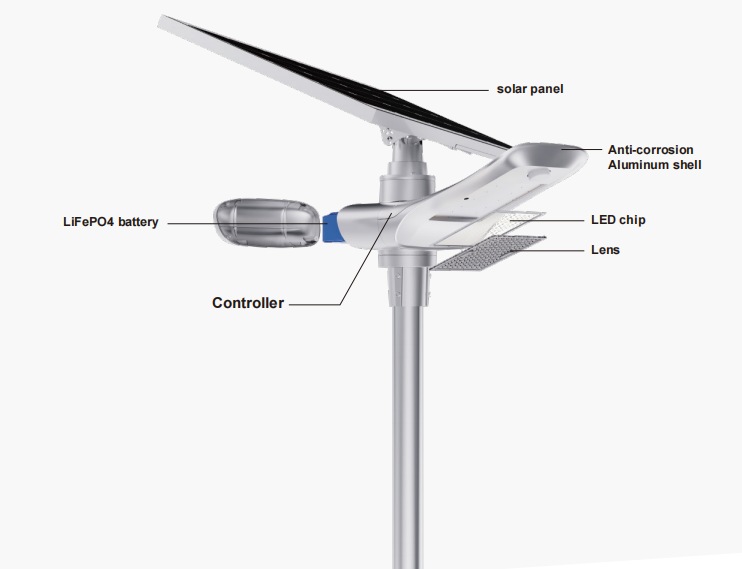
What is an All in One Solar Street Light?An all in one solar street light integrates the solar panel, LiFePO4 battery, MPPT charge controller, and LED module into a single weather-sealed housing. This design removes feeder cabling, control cabinets, and trenching, so that installation is quick, clean, and repeatable. Many models add smart control (profiles, motion-based dimming) and IoT monitoring for fleet-level visibility. When it's the right fit: corridors with good sun exposure, projects where trenching is difficult or expensive, fast retrofits, parks/campuses, rural or developing grids.The ProsZero Trenching & Rapid DeploymentNo underground feeders, no junction boxes, no utility tie-ins. Crews mount the head, set tilt/aim, and commission with a handheld remote—cutting civil costs, accelerating handover, and keeping sidewalks and landscapes undisturbed.Low OPEX & Predictable Lifecycle CostsWith no grid draw, energy bills drop to zero. Pair long-life LiFePO4 and high-efficacy LEDs with optional remote diagnostics, and routine work narrows to scheduled panel/lens cleaning and periodic checks—easy to plan and budget.MPPT Efficiency for Stable Nightly PerformanceModern multi-peak MPPT continuously tracks the true maximum power point—even under partial shade or dust—boosting daily harvest and keeping night-to-night output steady across seasons.Safer, Cleaner, More Resilient by DesignLiFePO4 chemistry offers excellent thermal stability and cycle life. IP-rated, anti-corrosion housings and surge protection keep lights operating through rain, dust, and coastal air—delivering reliability with zero operational emissions.Optional Smart & IoT ControlTime-of-night dimming, motion-activated boost, QR-code commissioning, and NB-IoT/LoRa dashboards reduce truck rolls, surface faults early, and give teams fleet-level control of every asset.The ConsSolar Resource Rules PerformanceIn heavy shade or deep urban canyons, solar harvest falls. If the system isn't sized for the worst-month sun hours, the controller will dim output or shorten runtime to protect the battery.Mitigation: conduct a site survey and shading analysis, set correct tilt/azimuth, and design to worst-month PSH with margin.Higher Unit CAPEX vs. Basic Grid LEDsAll-in-one units bundle PV, battery, and controller, so the fixture price can exceed a simple grid-fed LED head.Perspective: compare total cost of ownership (TCO)—AIO often wins once you factor in avoided trenching, switchboards, meters, permits, and $0 energy.Batteries Still Wear—Plan a RefreshLiFePO4 lasts much longer than lead-acid, but not forever. Temperature, depth-of-discharge, and cycle count drive mid-life replacement timing.Mitigation: size correctly to limit deep cycling, choose serviceable designs, and budget a planned refresh.All-in-One vs. Split-Type vs. Grid LEDCriterionAll-in-One SolarSplit-Type SolarGrid-Tied LEDTrenchingNoneNoneRequiredInstall speedFastestFastSlow (civils)Panel placementFixed on headFlexible (best in shade)N/AOPEX$0 energy$0 energyUtility billsSun/shade sensitivityHigherLower (panel can move)NoneUnit CAPEXHigherHigher–HighestLowerBattery refreshYes (mid-life)Yes (mid-life)No batteryBest fitRoads/parks with good sun, fast retrofitsShaded sites, big PV needsGrid-ready corridorsRule of thumb: If the panel on the luminaire can see the sun for the worst month, all-in-one is the simplest, fastest path. If not, consider split-typeso the panel can be placed in full sun.Sizing Essentials Lighting target: mounting height, road width/class, required average lux and uniformity.Nightly load: LED wattage × hours by time-of-night profile (e.g., 100% 18:00–22:00; 70% 22:00–01:00; motion-boost thereafter).Worst-month sun hours: local PSH at your tilt/azimuth; apply shading/soiling factors.PV & battery: enough panel to fully recharge after a typical winter day; enough LiFePO₄ for target autonomy (e.g., 2–5 nights) without deep cycling.Environment: wind-load, corrosion class, surge rating, temperature range; maintenance plan for panel/lens cleaning.Ask your all in one solar street light manufacturer for a photometric layout and a worst-month energy model. Both are must-haves for municipal specs.Maintenance Still Matters Panel cleaning – Set frequency by site conditions (dust, pollen, salt spray). Even light soiling cuts harvest; rinse/soft-brush on a regular schedule.Lens/optics cleaning – Keeps lumens on the road and preserves uniformity; avoid harsh solvents and check for yellowing or cracks.Post-storm inspections – Reconfirm orientation/tilt, retorque brackets/fasteners, and inspect gaskets/seals and surge devices for damage.Battery health – Track SOC, cycles, and temperature via IoT or a handheld; tweak dimming profiles as seasons change and plan a mid-life refresh.Common MisconceptionsCommon misconceptions persist: that solar lights can't handle winter; in reality, they can when sized for worst-month irradiance, set to the proper tilt/azimuth, and paired with snow-shedding mounts and cold-rated components. Another myth is that batteries die quickly; Grade-A LiFePO4 with MPPT charging and sensible time-of-night profiles delivers long service life—just budget a planned mid-life refresh in the TCO. Output isn't unreliable; adaptive dimming deliberately lowers brightness during extended storms to preserve energy and reach dawn—energy management by design, not a defect. Finally, “any pole will do”is false; poles and brackets must meet local wind-load and corrosion requirements and use certified fasteners appropriate to height, exposure, surge protection, and grounding.When Not to Use All-in-OnePersistent shading you can't mitigateDense trees, building canyons, or architectural overhangs that block sun for long periods will starve the head-mounted panel.Very high latitudes without re-engineeringIf you won't upsize PV/battery and adjust tilt for worst-month irradiance, winter performance will suffer.Industrial dust without a cleaning planHeavy soiling (cement, mining, agriculture) will cut harvest and shorten autonomy unless routine washing is scheduled.In these scenarios, choose a split-type solar street light (so the panel can be placed in full sun) or address the site constraint before specifying all-in-one.FAQsQ1: How long will an all-in-one run during a stormy week?Properly sized systems budget multi-night autonomy and can dim intelligently to reach dawn—design to the worst month with margin.Q2: Is remote monitoring necessary?Not required, but it cuts OPEX by catching faults early and proving charge/discharge health across your fleet.Q3: Can I use all-in-one on main roads?Yes—if lumen class, optics, height, and spacing meet your road standard. Ask for a photometric layout.Q4: What about coastal sites and high winds?Specify anti-corrosion finishes, stainless hardware, surge protection, and poles rated for local wind codes.Q5: When should I choose split-type instead?When the panel on the head cannot see the sun (persistent shade) or you need larger PV/ground-level battery access.ConclusionFor many municipal, campus, and private-estate projects, all-in-one solar street lights deliver exactly what buyers want: no trenching, fast installs, and low OPEX—powered by MPPT efficiency, long-life LiFePO4, and optional IoT control. The trade-offs are real but manageable: design for your solar resource, accept that unit CAPEX can be higher than a basic grid LED, and plan for eventual battery replacement. Choose a vendor who will model both photometrics and energy, and your lights will simply work, night after night at a predictable cost.
View More
Trusted Solar Street Light Manufacturer for Global Projects
When it comes to reliable, high-performance solar lighting solutions, choosing the right solar street light manufacturer is crucial. At Roadsmart, we specialize in providing top-quality solar street lights for urban, rural, and industrial projects worldwide. From solar street light suppliers to complete project solutions, we ensure your investment delivers long-lasting efficiency and sustainability.Why Choose a Professional Solar Street Light Manufacturer?Selecting a trusted solar street light company ensures that your projects meet international quality standards and deliver consistent performance. Here's why partnering with a professional manufacturer makes all the difference:Quality & Reliability You Can TrustOur solar street lights are built with premium materials such as durable aluminum alloy housings, high-efficiency LED chips, and weatherproof designs rated up to IP66. By partnering with a certified solar street light factory, you benefit from products designed to withstand harsh weather and long-term use.Cost-Effective & Scalable SolutionsWe provide solar street light wholesale options that reduce your per-unit costs while offering scalable solutions for small community installations or large-scale urban projects. Our one-stop service—from design to delivery—ensures your procurement process is seamless.Compliance & CertificationsAll our products meet CE, RoHS, and ISO9001 standards. Working with an experienced solar street light manufacturer guarantees compliance with regulations in any country, giving you peace of mind for global projects.Our Solar Street Light Products & SolutionsWe offer a wide range of solar street lighting options, catering to diverse project requirements.Types of Solar Street LightsAll-in-One Solar Street Lights: Integrated battery and solar panel design for easy installation.Split Solar Street Lights: Separate panels and batteries for larger installations.Smart Solar Street Lights: IoT-enabled lighting for intelligent control and monitoring.Customization OptionsAdjustable brightness and pole heights to suit your project.Battery capacity and solar panel size tailored to local conditions.Advanced features such as anti-theft designs, motion sensors, or smart timers.Suitable ApplicationsUrban roads, highways, and city streetsParking lots, campuses, and industrial parksRural electrification and community lighting projectsHow We Ensure Quality & PerformanceAdvanced Manufacturing & TestingOur solar street light factory implements precise manufacturing techniques including CNC machining and rigorous testing for longevity, waterproofing, and durability. Each product undergoes temperature cycle testing and corrosion resistance checks to ensure long-term reliability.Battery & Solar Panel PerformanceLong-life lithium or LiFePO4 batteriesHigh-efficiency monocrystalline or polycrystalline solar panelsIntelligent charge-discharge management systems to maximize lifespanAfter-Sales Support & WarrantyWe back our products with a comprehensive warranty and dedicated after-sales service. Our team provides installation guidance, technical support, and global logistics assistance, ensuring a hassle-free experience for all clients.Case Studies & Global ProjectsUrban Road ProjectsOur lights illuminate major city streets across multiple continents, reducing energy costs and enhancing public safety.Rural Electrification ProjectsDurable solar street lights have brought sustainable lighting to remote communities, offering reliable performance under extreme weather conditions.Smart City Solar LightingThrough IoT-enabled solutions, we support intelligent lighting management, energy efficiency monitoring, and automated control for smart city initiatives.Frequently Asked Questions (FAQ)Q: How long do your solar street lights last?A: Our lights are designed for 25,000–50,000 hours of illumination, depending on the model and usage conditions.Q: Can you customize solar street lights for specific projects?A: Yes, as a leading solar street light company, we offer full customization including brightness, battery capacity, and pole height.Q: What is the warranty period?A: We provide a 3–5 year warranty, with technical support and replacement parts available throughout.Q: Do you supply in bulk for large-scale projects?A: Absolutely. We offer solar street light wholesale options and can fulfill large orders from our factory with fast lead times.Q: How do you ensure timely delivery?A: Our efficient supply chain and professional logistics team ensure on-time delivery worldwide.Get a Quote from a Reliable Solar Street Light ManufacturerReady to power your projects with high-quality solar street lights? As a trusted solar street light supplier and manufacturer, we deliver tailored solutions for any project size. Contact our experts today for a fast quotation and customized solution.
View More